In our quest to eat better, fuel our workouts, and support our health goals, protein powders have become nearly ubiquitous. But a recent investigation by Consumer Reports sheds a serious light on an often-overlooked risk: the presence of lead in many popular protein supplements. With this in mind, it’s more important than ever to choose a truly lead free protein powder and know what to look for when you scan labels and brands.
- What the Consumer Reports Investigation Found
- Why Lead in Protein Powders Deserves Attention
- What to look for: Choosing a Truly Lead-Free (or Low-Lead) Protein Powder
- A recommended “lead-safe” option: Wild Society Nutrition
- Conclusion: Make “lead free protein powder” a working standard
- What To Do Next
- Other Brand Options
- Resources
What the Consumer Reports Investigation Found
Consumer Reports tested 23 widely-available protein powders and ready-to-drink shakes (including dairy-, beef- and plant-based formulas). They found that more than two-thirds of the products contained more lead per serving than what CR considers “safe for daily intake” (~0.5 micrograms).
A few key takeaways:
- The highest lead levels were found in plant-based protein powders (often pea, rice or soy protein). For instance, one plant-based powder tested at 6.3 µg of lead per serving and another at 7.7 µg.
- Although dairy and beef-based powders fared somewhat better, “better” doesn’t mean “perfect.” Many still contained concerning levels.
- Protein supplements are less stringently regulated than foods or medications. Manufacturers aren’t required to get pre-market approval from the Food and Drug Administration (FDA) for heavy‐metal testing, which places consumers in the driver’s seat when evaluating safety.
In short: if you’re using protein powder daily (or multiple times daily), you may be unwittingly exposing yourself to a heavier lead burden than you thought.
Why Lead in Protein Powders Deserves Attention
Here’s why it matters:
- Lead is a known neurotoxin and there is no truly safe level of exposure. That said trace amounts make it into certain foods through the soil where they are grown or even in the manufacturing process.
- While one serving of a contaminated protein powder may not cause immediate acute harm, cumulative exposure over weeks, months or years.
- If you’re seeking a “lead‐free protein powder,” you’re doing more than a marketing check-box: you’re advocating for your long-term health.
What to look for: Choosing a Truly Lead-Free (or Low-Lead) Protein Powder
Here’s a checklist you can bring to the supplement shelf:
1. Heavy-metal testing & transparency
Look for brands that publish third-party heavy metal test results (including lead) for each batch or lot. If the brand lists Certificate of Analysis (COA) documents showing lead at or below safe limits, that’s a strong signal of integrity.
2. Certifications by reputable bodies
Brands that are certified by independent third-party testers such as:
- NSF International
- Informed Choice
- USP (United States Pharmacopeia)
3. Ingredient sourcing & production transparency
- Plant-based proteins (pea, rice, soy) are more susceptible to lead contamination via soil, water, air and industrial pollution.
- Knowing the farm or region of origin, processing methods and whether the manufacturer uses clean raw materials is a plus.
4. Serving size & calculation of heavy metal per serving
Some powders have very large servings (e.g., “mass gainer” formulas). A large scoop means more raw material and thus potentially more contamination per serving. In fact, one tested product had a large serving size and high lead per serving.
5. Avoiding over-reliance on supplements
Remember: whole food protein sources (eggs, lean meat or fish, legumes, and dairy) don’t carry the same heavy-metal risk burden as processed powders. If you can meet your protein needs via food, the pressure to choose a powder lowers and the risk of unintended lead exposure shrinks.
6. Red flags to watch out for
- No COA or testing data publicly available
- Generic claims like “tested for heavy metals” without specifics
- Plant-based formula with lots of “protein blend” and no clarity on sourcing
- Large serving size (≥ 50 g) without corresponding lab data
- No third-party certifications
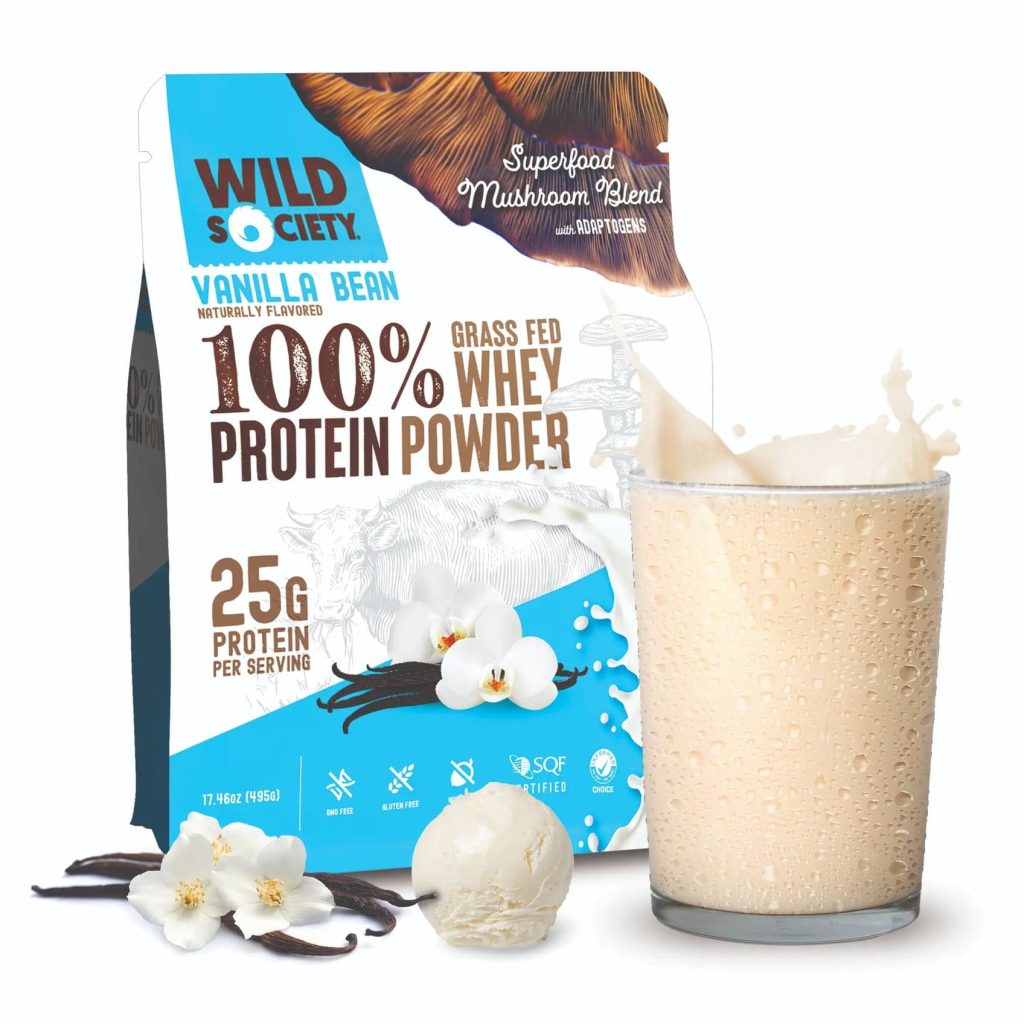
A recommended “lead-safe” option: Wild Society Nutrition
If you’re looking for a protein powder option that takes heavy-metal testing seriously, consider Wild Society Nutrition. Their paged on heavy-metal testing states clearly that:
- They were aware of the Consumer Reports findings and explicitly noted that they are not among the high-lead products tested.
- Their products are third-party tested (Informed Choice) and certified via SQF (Safe Quality Food) standard.
- They deliver lead levels well below the ~0.5 µg per serving threshold used by Consumer Reports’ “level of concern.”
- Their ingredient sourcing includes “clean, natural ingredients” and transparency around testing.
In other words, Wild Society Nutrition offers a model of how to choose a protein powder with lead-safety in mind. It may be worth evaluating their full range of products, checking the most recent COA, and deciding whether it fits your nutrition goals and budget.
“Most people don’t realize that heavy metals like lead can sneak into supplements through the soil where ingredients are grown,” says TJ Dillashaw, CEO of Wild Society Nutrition. “That’s why we made third-party heavy-metal testing a non-negotiable part of our production process. Every batch is tested and certified clean, so our customers can focus on performance and recovery, not on worrying what’s hidden in their protein powder.”
Conclusion: Make “lead free protein powder” a working standard
When you search for the phrase lead free protein powder, what you’re really seeking is “protein powder with minimal lead exposure risk, verified by testing, with transparent sourcing and certifications.” That’s the standard you should hold any supplement to, especially given the recent findings.
By taking these steps, you’ll be not just choosing a protein powder — you’ll be selecting a lead-safe protein powder, which aligns with both your fitness goals and your long-term health.
Other Brand Options
These brands test well in the Consumer Reports study:
- Muscle Tech
- Dymatize
- Momentous
Resources
About Our Methodology
We analyzed the reports that were recently released on this topic and spoke to an industry expert. We’ll meet you where you are on your planet and people-friendly journey. Let’s simplify decision making.